
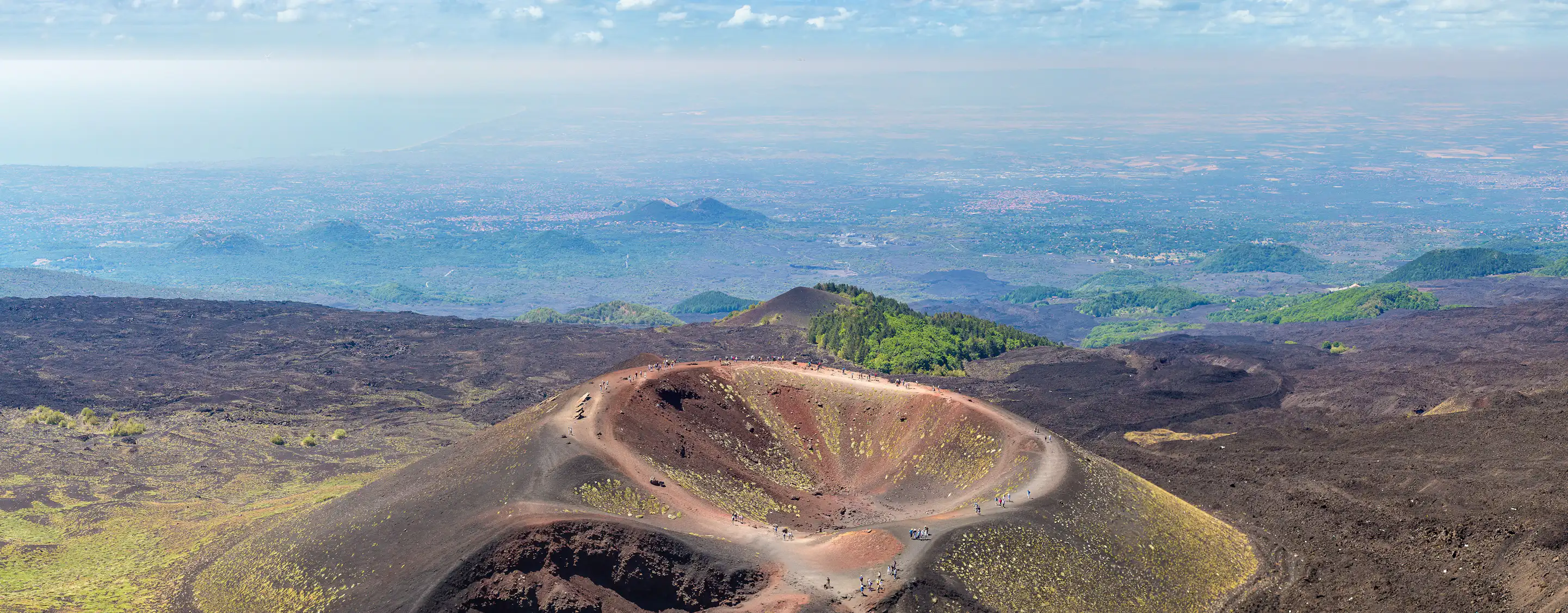
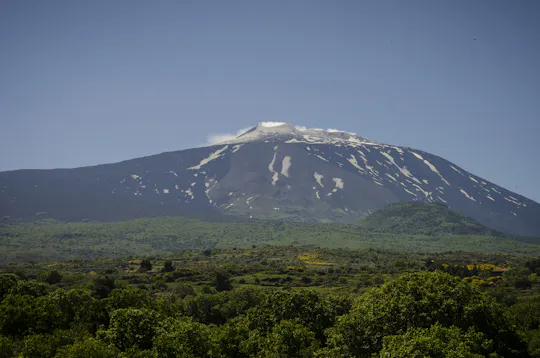
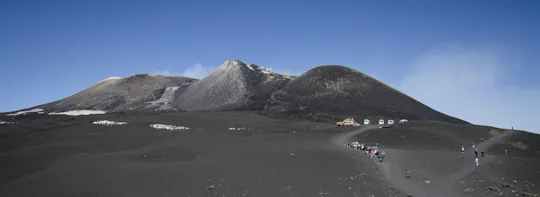
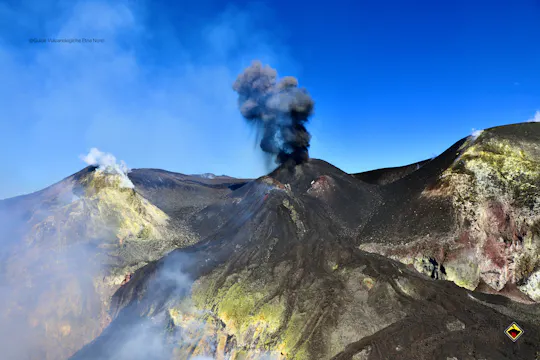
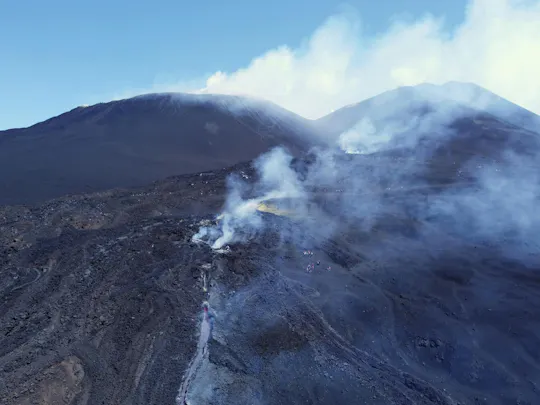
Etna is a Sicilian volcanic complex that originated in the Quaternary; it is the largest volcano in Europe, and it is among the world's most active ones. The imposing Sicilian volcano has, over time become an important attraction for tourists who arrive each year on the island, since it is one of the few active volcanoes in the world easily accessible by anyone.
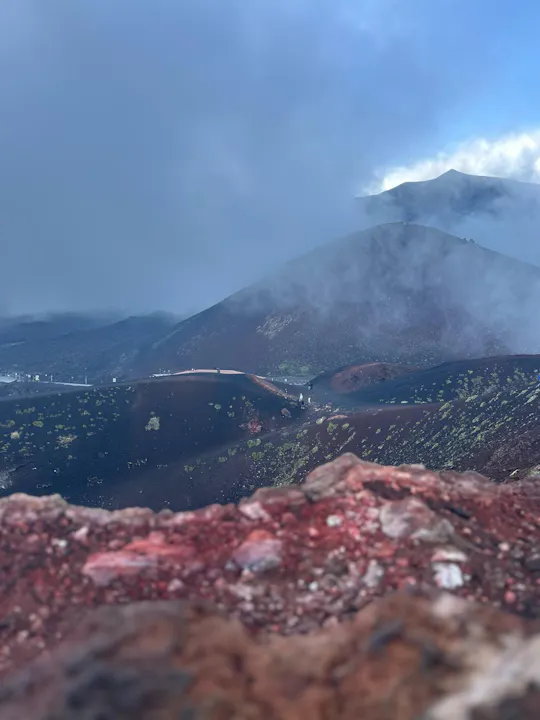
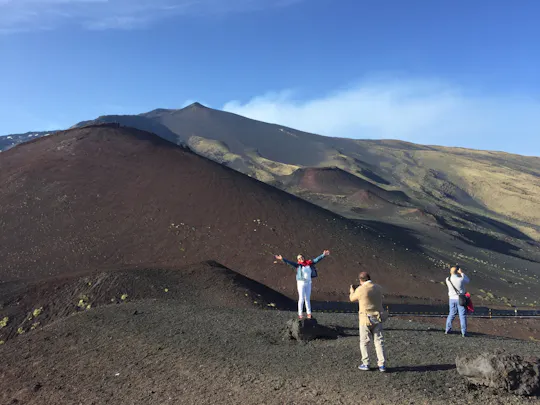
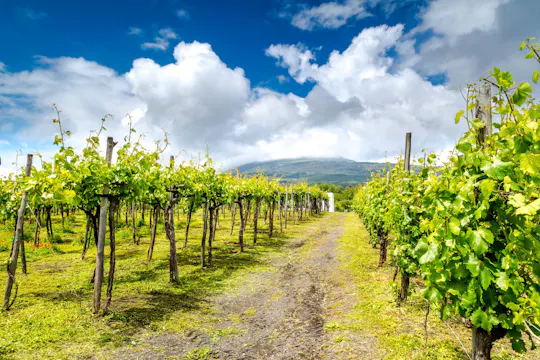
Located on the eastern coast of Sicily, within the territory of the province of Catania, it presents a surface characterized by a rich variety of environments: cityscapes, dense forests and desolate areas covered by magmatic rock and periodically subject to snow at the higher altitudes.
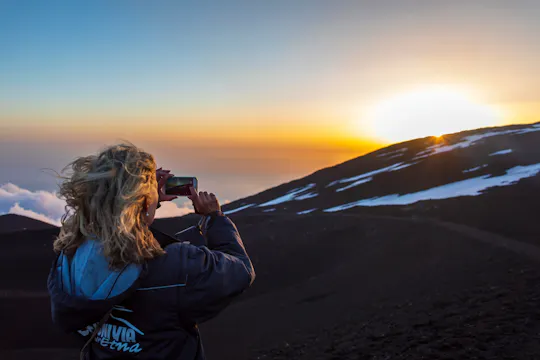
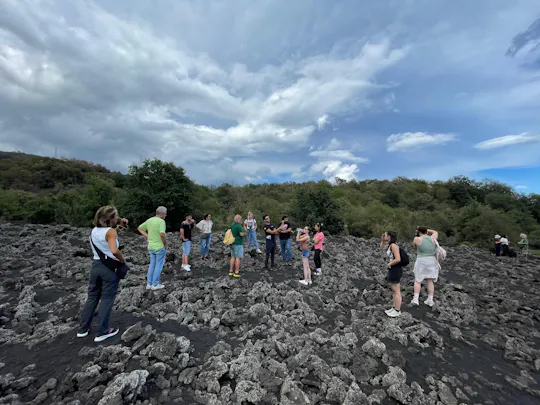
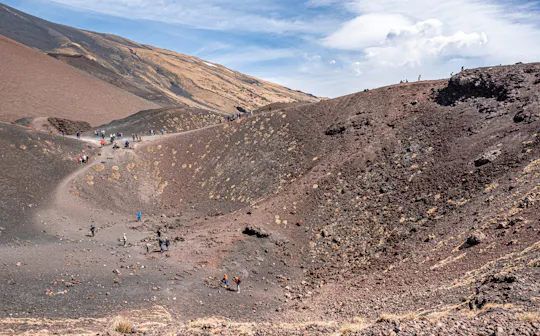
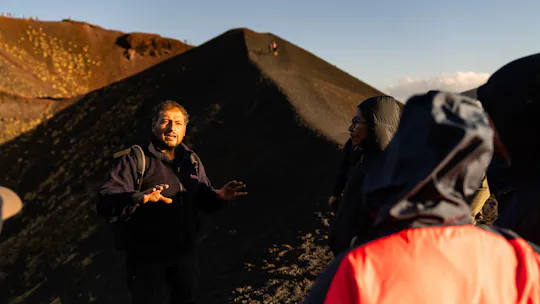
There are in fact, specialized guides and off-road vehicles that safely lead the visitors to the summit craters. Throughout the year, organized trips allow travellers to closely explore this marvel. Many of these tours start from Catania and aim to hike naturalistic trails, accompanied by expert guides, to discover and appreciate places of extraordinary naturalistic value within the reserve of Etna Park.
In addition, Mount Etna is full of lifeless lava caves that were created in numerous eruptions. Tourists participating in these tours can get down into the underworld of the volcano, equipped with helmets and caving lights, to appreciate this natural wonder!
This volcano is one of Italy's most important natural treasures. On the 21st of June 2013, the thirty-seventh session of the UNESCO Committee, which met in Cambodia, made Mount Etna a World Heritage Site.

