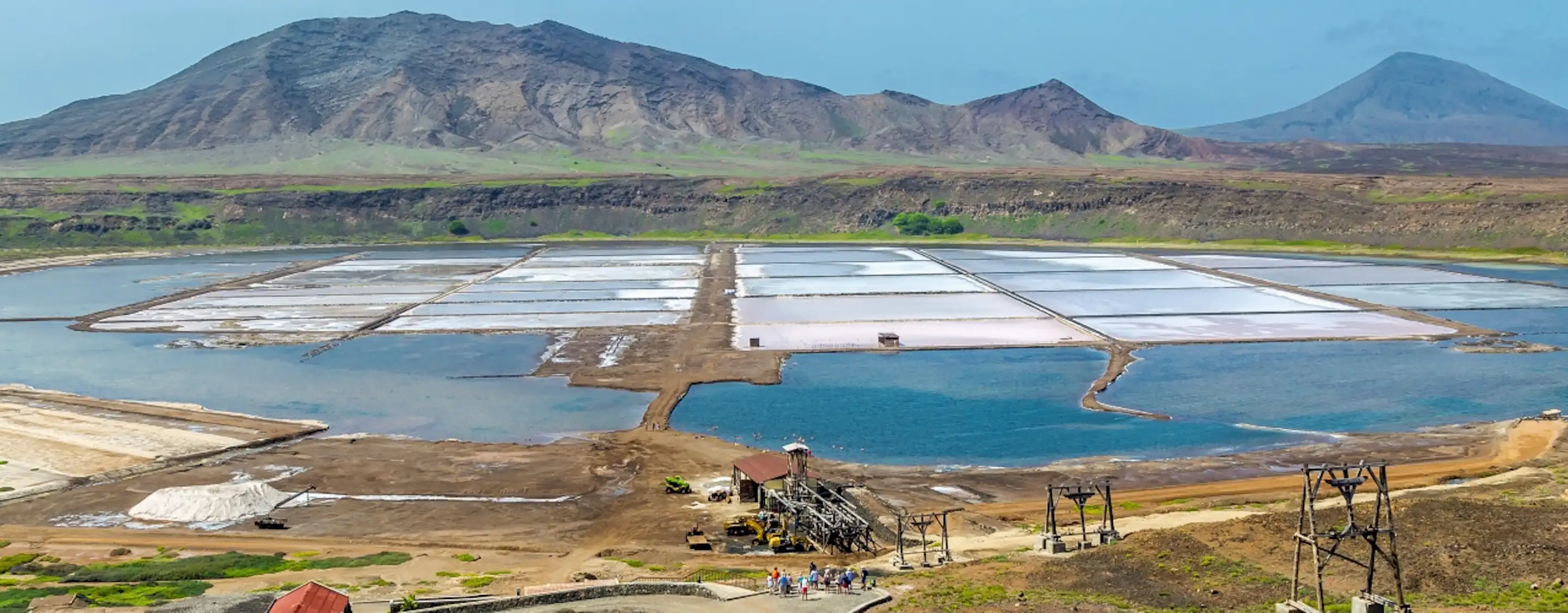
Deep inside an extinct volcanic crater, Pedra de Lume is one of Sal’s most unusual landscapes. Once the centre of the island’s salt industry, the crater is now filled with salt pans surrounded by dark volcanic rock. The contrast between the white salt, colourful mineral deposits and rugged crater walls makes it a striking place to explore, with a fascinating link to Sal’s industrial past.
You can walk around the old salt works, float effortlessly in the highly saline pools or simply take in the unusual colours and textures of the crater. The former salt pans were connected to the coast by a tunnel, allowing seawater to enter the crater and feed the evaporation pools. Fun fact: the water in the salt pools is around 26 times saltier than the sea, which is why you can float so easily without swimming.
A visit to Pedra de Lume gives you a different perspective on Sal, combining volcanic landscapes, local history and one of the island’s most unusual natural experiences.
Meta description:
Visit Pedra de Lume in Sal and float in salt pools inside an extinct volcanic crater surrounded by dramatic island landscapes.
File, immagini e analisi dati n
Deep inside an extinct volcanic crater, Pedra de Lume is one of Sal’s most unusual landscapes. Once the centre of the island’s salt industry, the crater is now filled with salt pans surrounded by dark volcanic rock. The contrast between the white salt, colourful mineral deposits and rugged crater walls makes it a striking place to explore, with a fascinating link to Sal’s industrial past.
You can walk around the old salt works, float effortlessly in the highly saline pools or simply take in the unusual colours and textures of the crater. The former salt pans were connected to the coast by a tunnel, allowing seawater to enter the crater and feed the evaporation pools. The water in the salt pools is around 26 times saltier than the sea, which is why you can float so easily without swimming.
A visit to Pedra de Lume gives you a different perspective on Sal, combining volcanic landscapes, local history and one of the island’s most unusual natural experiences.

